

Clothesline Installation Cost Melbourne
16 September 2026
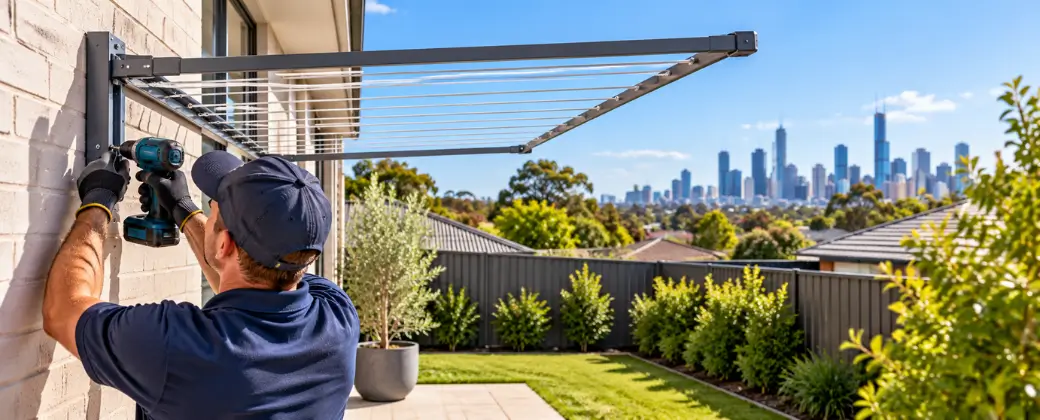
A new clothesline doesn’t seem like a complicated job until you start looking at where it needs to go.
A wall-mounted clothesline needs a solid fixing point. A rotary clothesline needs a stable footing. A retractable line needs suitable fixing points at both ends. If you’re replacing an old clothesline, the existing holes or footing may or may not be suitable for the new model.
So the cost of installation depends less on the clothesline itself and more on what is involved in putting it in the right place.
For a straightforward clothesline installation in Melbourne, installation can start from around $120-$150 when the wall or existing mounting point is suitable. A standard wall-mounted or fold-down installation is commonly around $150-$450, while a rotary clothesline requiring a new concrete footing can be around $250-$650. Current Victorian pricing guides show similar ranges, with standard Melbourne installation services also advertised from around $165-$185.
The clothesline itself is usually a separate cost unless you are buying a supply-and-install package.
Here is a practical guide to the installation side of the job:
| Clothesline installation | Approximate cost |
|---|---|
| Basic wall-mounted or fold-down installation | From $120-$150 |
| Standard wall-mounted installation | $150-$450 |
| Retractable clothesline installation | $150-$400 |
| Ground mount using an existing socket | $120-$300 |
| Ground mount with new concrete footing | $250-$650 |
| Rotary clothesline installation | $400-$900 supplied and installed |
| Old clothesline removal | From around $80 |
| New footing or difficult ground | Additional cost |
These are guide prices, not a fixed rate for every property. A wall-mounted line going onto a suitable brick wall is much quicker to install than a rotary line that needs a new footing dug and concreted.
For comparison, one Melbourne clothesline installation service currently advertises a standard installation at $185 including cement for ground installations or fixings for wall-mounted installations.
Another current Australian pricing guide puts installation of a fold-down wall-mounted line at approximately $120-$250 and a rotary hoist requiring a concreted socket at around $200-$400.
There isn’t one installation method that works for every clothesline.
The most common options are fold-down, wall-mounted, retractable and rotary clotheslines. Get Handyman installs these types for Melbourne houses, units, apartments and rental properties.
A fold-down clothesline is fixed to a wall and can be folded up when it isn’t being used.
It’s a practical choice for:
The important part is the wall.
A loaded clothesline puts considerably more force on the brackets than an empty frame because wet clothes are heavy. The brackets therefore need to be fixed to a suitable structural surface. Plasterboard on its own isn’t a suitable fixing point for a heavily loaded clothesline.
A wall-mounted line can be a good option when the laundry or outdoor area is close to a suitable wall.
Brick and concrete are commonly used for this type of installation, while timber can also work when there is adequate structural support.
The fixing method needs to match the wall.
A clothesline shouldn’t simply be screwed into the first available surface because the installation needs to remain secure when the line is full of wet washing.
Retractable clotheslines are useful when you don’t want a permanent frame taking up the entire area.
The line extends when you need it and retracts afterwards.
They can work particularly well across:
The catch is that both ends need suitable fixing points. A retractable clothesline isn’t a good solution if one side has nowhere structurally appropriate to attach the unit.
A rotary clothesline makes sense when you need a larger amount of drying space and have enough room outdoors.
Unlike a wall-mounted line, a rotary model is supported from the ground.
The installation may use an existing socket or require a new footing.
If a new footing is needed, the installer has to consider the location, ground conditions and the space required for the clothesline once it is fully opened. Current Victorian pricing puts rotary supply-and-install jobs substantially higher than basic wall-mounted installations.
Brick is one of the more common surfaces for a wall-mounted clothesline.
That doesn’t mean every brick wall is automatically suitable.
The installer still needs to consider:
The clothesline also needs to be level.
A line that is slightly out of level may not seem like a major problem when it is empty, but it becomes much more noticeable when the frame is loaded with clothes.
If you’re asking for a quote, a photograph of the wall can help determine what sort of installation is likely to be required.
Timber can sometimes provide a suitable fixing surface, but it depends on how the structure has been built.
A solid structural timber frame is very different from a lightweight fence panel.
If you’re thinking about attaching a clothesline to a fence, don’t assume that the fence is strong enough simply because it doesn’t move when you push it.
The brackets need to transfer the load into a structure capable of supporting the clothesline and wet washing over time.
Get Handyman recommends sending a photo of the proposed installation area when requesting a quote for this type of job. The company’s Melbourne service specifically notes that timber structures need to have suitable structural support behind the fixing points.
Not by relying on the plasterboard alone.
This is particularly important with fold-down clotheslines because the frame creates leverage as it projects away from the wall.
If there is suitable structural support behind the plasterboard, the installation may be possible using an appropriate fixing method. If the wall construction doesn’t provide a suitable fixing point, another location or mounting method may be needed.
If you aren’t sure what is behind the wall, send photographs before buying the clothesline.
That can prevent buying a model that isn’t suitable for the intended location.
Ground-mounted clotheslines can be installed in areas with paving or concrete, but the installation method may be different from putting a post into soil.
For example, a rotary clothesline that normally uses a ground socket may require a different mounting solution where the proposed location is already paved.
Depending on the product and surface, the job may involve:
Core drilling into concrete or paving is a different job from installing a clothesline in a garden bed, so mention the existing surface when requesting a quote.
You don’t necessarily need to change the location when replacing an old clothesline.
If the existing position works well, reusing the area can save some work. But the old fixing points or ground socket still need to be checked.
For a wall-mounted replacement, the installer may need to check whether:
For a ground-mounted replacement, the existing socket needs to suit the new clothesline.
A new rotary model may have different requirements from the old one, even if both occupy roughly the same area.
Sometimes the clothesline itself isn’t the problem.
The location is.
You might want to move it because the current position:
Moving a wall-mounted clothesline means creating suitable fixing points in the new position.
Moving a ground-mounted clothesline can be more involved because the old footing may need to remain, be removed or made good, while a new footing is created elsewhere.
The cost therefore depends on what is already installed and where you want the clothesline to go.
The biggest available space isn’t necessarily the best location.
Think about how you will actually use the clothesline.
A position that receives useful sunlight can help clothes dry naturally.
Good airflow can make outdoor drying more effective, particularly when the area doesn’t receive strong direct sunlight throughout the day.
You shouldn’t have to walk around obstacles every time you hang out washing.
The route from the laundry to the clothesline matters.
Make sure the open clothesline doesn’t interfere with doors, gates or commonly used paths.
The clothesline should be comfortable for the people who will use it most.
A line that is too high can make hanging clothes frustrating. One that is too low can create problems with long garments and people walking underneath it.
For rotary clotheslines, remember that the entire frame needs space.
Don’t measure only the centre pole.
The outer lines can extend much further and need clearance from fences, walls, trees, sheds and other structures.
Many Melbourne homes have limited outdoor space, particularly units, townhouses and properties with narrow side passages.
A large rotary clothesline isn’t always practical in these situations.
A fold-down or retractable clothesline can leave the ground available when you’re not drying clothes.
Before choosing a model, measure:
A clothesline can technically fit into a space and still be inconvenient to use.
For a narrow Melbourne courtyard, that distinction matters.
Apartment and unit installations need a little more planning.
The available wall may not be part of the structure you are allowed to modify. An external balcony or common wall can also have building or owners corporation requirements.
Before drilling into an apartment wall or external structure, check the relevant building and owners corporation rules.
Get Handyman’s Melbourne service can assess apartment installations, but the proposed fixing location still needs to be permitted and structurally suitable.
For renters, landlord approval should be obtained before installing a fixed clothesline.
A clothesline is a common maintenance item for rental homes.
A landlord or property manager may need one installed:
For a rental property, the simplest suitable installation is often preferable to creating unnecessary work.
A fold-down line can be useful where the backyard is small, while a rotary model may make more sense for a larger house with enough outdoor space.
If other small maintenance jobs are needed at the same property, clothesline installation can also be arranged alongside general handyman work.
Removing an old clothesline is usually an additional part of the job unless it is included in the installation quote.
Current Victorian pricing guides put removal and disposal at approximately $80-$250, depending on the type of clothesline and how it is fixed.
A wall-mounted line that can be unbolted is generally simpler to remove than a ground-mounted rotary line with a concrete footing.
If you’re replacing an old clothesline, mention the existing one when asking for a quote rather than assuming removal is included.
Yes.
Get Handyman’s Melbourne service can discuss installation of a customer-supplied clothesline where the product and site are suitable for the job.
If you’ve already purchased the clothesline, provide:
This is particularly useful if you’ve purchased a clothesline online and want someone to handle the assembly and installation.
You don’t need to write a long description of the job.
A few photographs and basic details are usually more useful.
Send:
If the clothesline is going onto a fence, balcony, concrete or paving, include a close-up photograph of that surface.
It gives the installer a much better idea of what is involved before arranging the visit.
Get Handyman installs wall-mounted, fold-down, retractable and ground-mounted clotheslines throughout Melbourne. The service covers homes, units, apartments and rental properties, including installation of customer-supplied clotheslines where the product and site are suitable.
The right installation depends on the clothesline and the property.
A fold-down line on a suitable brick wall may be a relatively quick job. A rotary clothesline with a new concrete footing is a different project. The same applies when an old line needs to be removed or a new location needs to be prepared.
For a basic installation, budget from around $120-$150, with more involved installations costing more. Current Melbourne and Victorian pricing supports a wider range of roughly $150-$450 for many wall-mounted installations and $250-$650 where a new ground footing is required.
If you’ve already bought your clothesline, send Get Handyman a photo of the product and the proposed installation area along with your Melbourne suburb.
Get Handyman can assess the installation and provide a quote for your clothesline installation or replacement.
A straightforward clothesline installation can start from around $120-$150 when there is a suitable existing wall or mounting point. More typical wall-mounted installations can fall around $150-$450, while ground-mounted installations requiring a new footing can cost more.
A basic fold-down installation can start around $120-$150 where the wall is suitable and no unusual preparation is required. Current Australian installation pricing places straightforward fold-down wall installations around $120-$250 in many cases.
Yes. Brick is commonly used for wall-mounted clotheslines, provided the brickwork and fixing location are suitable. The installer needs to use fixings appropriate for the masonry and ensure the brackets are securely attached.
Plasterboard alone should not be relied upon to support a heavily loaded clothesline. A suitable structural fixing point behind the plasterboard is required for this type of installation.
Yes. Get Handyman can discuss installation of customer-supplied clotheslines where the product and installation site are suitable.
A rotary installation can start around $200-$400 for installation, depending on the footing and site. A complete rotary clothesline supplied and installed can be around $400-$900 based on current Victorian pricing.
Yes. The existing location, wall fixings or ground socket should be checked first. If the new clothesline has different dimensions or mounting requirements, some additional preparation may be necessary.
Yes, where the existing clothesline and proposed new location are suitable. Moving a wall-mounted clothesline generally requires new fixing points, while moving a ground-mounted model can involve a new footing.
Current Victorian estimates put old clothesline removal and disposal at approximately $80-$250, depending on the type of installation and how difficult it is to remove.
Fold-down and retractable clotheslines are often practical for smaller Melbourne yards because they can leave more usable floor space when the clothesline isn’t being used. The available wall width and clearance should be checked before buying.
It can be possible, but the mounting method needs to suit the particular clothesline and concrete area. Some installations may require a surface-mounted solution or other suitable mounting system rather than a conventional ground socket.
A simple installation may take around an hour or less, while a new ground footing, removal work or difficult access can make the job longer. Current Melbourne installation services report approximately 25-35 minutes for some standard installations and up to an hour for certain ground-mounted jobs.
It may be possible, but the proposed wall or balcony structure needs to be suitable and permission may be required. Owners corporation or building requirements can apply to external alterations.
If you’re renting, check with your landlord or property manager before installing a fixed clothesline. Drilling into walls or making other permanent changes may require approval.
Not necessarily. Installation and the clothesline are often separate costs. Get Handyman can discuss installation of a clothesline you have already purchased, subject to the product and site being suitable.

Services
Copyright © 2026 Get Handyman. All rights reserved